The Crown and Vessel How Hair Rituals Nurture Identity and Inner Radiance
Hair can hold a memory before the mind has words for it.
A woman may remember the first time she changed her hair after heartbreak. The trim before a new job. The braids a grandmother parted with careful fingers. The curls she was taught to tame, then later learned to love. Hair is never just hair. It is history, mood, culture, softness, defiance, and self-recognition. It sits where the world sees us first, yet it is rooted in places far deeper than appearance.
This is the heart of the Crown and Vessel philosophy in beauty. The crown is the hair, the visible expression of identity. The vessel is the body, the living home that carries emotion, energy, tension, grief, joy, and desire. When beauty care honors both, it becomes more than grooming. It becomes a return to the self.

Hair is a crown because it carries identity
Calling hair a crown is not only poetic. It speaks to how closely hair is tied to dignity, visibility, and self-expression.
Across cultures, hair has marked rites of passage, spiritual devotion, rebellion, mourning, sensuality, and belonging. A shaved head can signal release. Long hair can feel like protection. Gray hair can become a badge of freedom. Braids, locs, silk presses, curls, wraps, and protective styles all carry meaning beyond their shape.
For many women, hair also holds the weight of being seen. Compliments, criticism, touch without permission, beauty standards, school rules, workplace expectations, family opinions, and generational messages often gather around the head. The crown can become a place of pride, but also pressure.
That is why hair care needs tenderness. A scalp massage, a careful detangling session, or a cleansing ritual can quietly say, “I am allowed to care for the part of me the world notices.”
I once worked with a woman who came in after years of wearing her hair pulled back tightly. She described it as practical, but her hands gave away the story. Every time we spoke about letting her hair fall around her face, she touched the nape of her neck as if checking whether she had permission.
We did not begin with a dramatic transformation. We began with her scalp.
Warm oil. Slow pressure. Breath. A gentle cleanse. A cut that removed weight without erasing length. By the end, her hair looked healthier, yes, but the real shift was in how she held her head. She looked in the mirror and did not rush to fix anything. She simply looked.
That moment stayed with me because it revealed something beauty professionals see often: the crown changes when the person beneath it feels safe.
The vessel holds what the mirror cannot show
The body is not an accessory to beauty. It is the vessel that carries every unseen thing into the visible world.
Stress can tighten the jaw. Sadness can dull the eyes. Exhaustion can flatten posture. Joy can brighten the face before any product touches the skin. The body speaks constantly, often through the very features we try to “correct.”
This does not mean every skin concern, hair concern, or body change is emotional. Biology, genetics, hormones, environment, nutrition, and health all play real roles. Beauty care should never make people feel responsible for every line, breakout, or shedding season. Still, the body and emotions are deeply connected. Anyone who has cried and woken with swollen eyes knows that feeling leaves traces.
The vessel asks for listening.
That may look like noticing how the scalp feels after a stressful week. It may mean recognizing that the shoulders rise toward the ears during a facial. It may mean choosing a slower appointment instead of another high-stimulation treatment. It may mean drinking water, sleeping when possible, moving gently, or placing hands over the chest for three breaths before looking in the mirror.
Nurturing the vessel is not vanity. It is maintenance for the inner life.
When body care becomes a ritual, beauty shifts from correction to connection. The skin is not a problem. The hair is not a project. The face is not a set of flaws. They become parts of a living person asking for care.

Scalp rituals awaken both the crown and the nervous system
The scalp is one of the most overlooked places in beauty care. It is hidden under the hair, but it influences how hair looks, feels, and grows. It also holds tension. Many people clench the scalp without realizing it, especially around the temples, hairline, and base of the skull.
A scalp ritual can be simple, but it changes the tone of the whole beauty experience.
It might include:
A slow brushing or finger-combing to release tangles without rushing
A warm oil or serum chosen for the scalp’s needs
Circular massage along the temples, crown, and occipital area
A gentle cleanse that treats the scalp as skin
Steam or a warm towel to encourage softness and relaxation
A closing moment where the hair is styled with intention
The physical benefits are easy to appreciate. The scalp feels cleaner. The roots feel lighter. The hair may sit with more lift and movement. Product buildup softens. Dryness can feel less severe when the right oils or treatments are used with care.
The inner effect can be just as powerful. Touch, when respectful and welcome, can help the body settle. Slow massage invites the breath to deepen. The mind stops scanning the room. The face softens. The shoulders drop.
This is why a scalp ritual can feel emotional. The head carries so much responsibility. It plans, remembers, worries, dreams, and performs. When someone cradles the head with care, the body may finally recognize that it does not have to brace.
At home, a crown ritual can take ten minutes. Warm a small amount of oil between the palms. Part the hair in sections. Press the fingertips into the scalp, not the nails. Move in slow circles. Pause at the temples. Breathe out longer than you breathe in. If the hair is protective styled, work along accessible parts and edges with gentleness.
The goal is not perfection. The goal is presence.
Facial massage invites the vessel to soften
Facial massage is often described in terms of glow, sculpting, or depuffing. Those can be lovely effects, especially when massage supports circulation and lymphatic movement. But the deeper gift is how it helps the face release what it has been holding.
The face performs all day. It smiles when tired. It holds back tears. It concentrates through the brow. It clenches through the jaw during stress. It communicates before words arrive.
A thoughtful facial massage respects that effort.
The cheeks are not just cheeks. They are where laughter lives. The jaw is not simply a contour line. It is where many people store control. The forehead is not just a place for lines. It is where thought gathers. When massage meets these areas slowly, the face can begin to feel inhabited rather than inspected.

Beauty deepens when ritual replaces rushing
Many beauty routines are built around speed. Wash quickly. Apply quickly. Style quickly. Fix quickly. There is nothing wrong with efficiency, especially in real life. Mornings can be full. Caregiving, work, errands, and fatigue shape what is possible.
Still, the body knows the difference between being handled and being honored.
Ritual does not require an elaborate setup. It requires attention. A ritual can be as simple as changing the pace of what already happens.
Use the cleanser as a moment to touch the face with kindness. Apply conditioner as if the hair deserves patience. Massage the scalp for one minute before rinsing. Press moisturizer into the skin instead of rubbing it on while mentally elsewhere. Wrap the hair at night with the feeling of protecting a crown, not hiding a problem.
Ritual also invites better choices. When care slows down, it becomes easier to notice what the crown and vessel actually need.
Maybe the scalp needs clarification, not more styling cream. Maybe the ends need trimming, not another product. Maybe the skin needs barrier support, not another active ingredient. Maybe the body needs sleep more than a new serum. Maybe the beauty appointment needs to be quiet instead of chatty.
This kind of attention builds trust with the self. Over time, the mirror becomes less of a judge and more of a witness.
The Crown and Vessel practice at home
A deeper beauty practice does not need to be complicated. It can begin with one weekly ritual that brings the hair and body into the same conversation.
Try this simple sequence when you have time to move slowly:
Set the tone
Dim the lights if possible. Put the phone away. Choose one scent, oil, or towel that signals care.
Check in with the vessel
Ask, “What am I carrying today?” Notice the jaw, shoulders, chest, belly, and breath. There is no need to solve anything. Just notice.
Begin at the crown
Massage the scalp with fingertips. Move slowly around the hairline, temples, crown, and base of the skull. If using oil, choose a small amount and focus on comfort.
Cleanse or condition with patience
Treat the scalp as skin and the hair as fiber that needs respect. Detangle from ends upward. Avoid tugging through knots as if they are inconveniences.
Massage the face
Use clean hands and a facial oil or moisturizer that suits the skin. Glide over the cheeks, press along the brow, and soften the jaw. Keep pressure gentle.
Close with gratitude
Before styling or moving on, place both hands over the heart or hair. Thank the body for carrying you. Thank the crown for expressing you.
This may sound small, but repeated care changes the relationship. The crown becomes less tangled in criticism. The vessel becomes less ignored. Beauty becomes less about chasing another face and more about meeting your own.
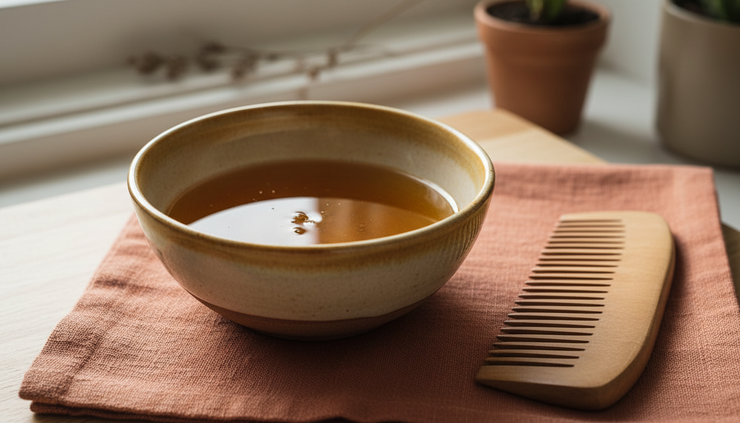
The transformation is in how you return to yourself
The most beautiful hair service is not always the most dramatic one. The most meaningful facial is not always the most advanced. Sometimes transformation arrives through a breath, a softened jaw, a scalp that no longer aches, or a woman seeing herself without flinching.
The crown deserves care because it carries identity into the world. The vessel deserves care because it carries the unseen life beneath that identity. When both are nurtured, beauty becomes fuller. Hair shines differently when the person wearing it feels connected. Skin glows differently when the face has softened from within.
The Crown and Vessel philosophy asks for a slower kind of beauty, one that listens before it changes, touches before it corrects, and honors the whole person in the chair or at the mirror.
Begin with one ritual. One gentle parting of the hair. One slow massage across the temples. One moment of thanks for the body that has carried every version of you so far.
That is where radiance begins.


Comments